Why is it that so many fat activists and people within the fat activist community have been turning their backs on FA in favor of The Fantasy Of Thin? I'm so tired of seeing fat role models decide to lose weight. Rosie Mercado comes to mind, but she's only one of many. I've seen many bloggers embark on a "weight loss journey". The 95% probability that they'll gain it back and then some doesn't seem to bother them, they're too caught up in dropping pant sizes. What really bothers me is the damage that this does to the fat acceptance community. Yes, it often damages individuals too, but so do a lot of things. Usually I say something's not my business... unless it's promoting oppression. As the old saying goes, your right to swing your fist stops at my nose.
Now, I'm a queer woman. I've fallen in love with men and women and had my heart broken by both. It's a pretty common belief that queerphobia is harmful and that people just, you know, shouldn't be assholes. They should be tolerant and accepting and, heck, even happy for us when we manage to find happiness, regardless of whom that's with. I don't hear a lot of people saying that it's someone else's choice to be queerphobic and we should walk on eggshells to not offend them or hurt their feelings because, you guuuuuuys, it's THEIR choice to hate people. Never mind that it results in anything from job discrimination, to suicide and murder. Oh no no, let's let them be. Live and let live, right? Except they're not really letting us live are they?
I feel the same way about fatphobes really. Even people with internalized fatphobia. It does so much damage to the rest of the fat community and it literally can cost people their lives.. yes, from job discrimination to suicide, being fat in a fatphobic society sucks, and when you give into that fatphobia, you're making it worse for the rest of us.
Now, this doesn't mean that I don't understand where they're coming from. I wasn't always a fat activist, I hated myself, I dieted, I was suicidal, I was extremely fatphobic. But I also didn't go around saying I was a part of the FA community and totally on board with fat acceptance as I'm starving myself. Meaning that if you're going to decide to lose weight, you need to recognize that you're no longer body positive and that you're harming your fellow fatties. And don't be surprised when people call you out, because people will definitely call you out.
I'm pretty tired of tip toeing around dieters in order to avoid offense. I'm not going to put up with queerphobes, sexists, or fatphobes (or any other kind of bigotry for that matter, but those are a few that apply to me). Just because something is normalized in our culture doesn't make it okay or protected.
I have a couple of people in the FA community that I still look up to. People who haven't given in. People who are still fighting for equality. But every time I see a friend or blogger or activist fall prey to this misogynistic beauty ideal, a little piece of me dies. It makes me so sad and angry and disheartened. This means that I just have to fight harder I guess.
Showing posts with label dieting. Show all posts
Showing posts with label dieting. Show all posts
Monday, May 18, 2015

Friday, March 16, 2012
The Moment I knew I Had to Stop Dieting
So the Huffington Post is asking for video submissions for "The Moment I Knew I HAD To Lose Weight." Dr. Deah Shwartz wrote to them about doing a series on "The Moment I Knew I HAD to Stop Dieting. They said if people sent in videos like that they'd do a piece. So here's mine- everyone and anyone can make and submit one. Just email it, with your full name to themomentiknew@huffingtonpost.
Sunday, January 1, 2012
Happy New Year everyone! Welcome 2012!
 |
| costume from last night's masquerade ball |
Happy New Year! Wow, is it 2012 already? 2011 was a special year to me; it was my first full year of body acceptance and fat activism. My first exposure to fat acceptance was in October of 2010 so most of my year was spent hating my body with horribly destructive habits. In 2011 I got to go through it all- making new friends, having to move, parties, holidays.. all being fat and happy the entire time. Wow, how completely liberating! 2011 was a good year for me.
No, I don't have a new year's resolution and I don't plant to. Most resolutions fail (I wonder how much of this failure is because one of the top resolutions is weight loss which, itself, fails 95% of the time?) and most are focused on our flaws and what we need to change about ourselves. More so, though, it sets you up for disappointment if you can't go through with it. I feel confident that I can change and progress and do some awesome things in the coming year without making promises to myself or anyone else . This year, I'm going to try to just be. I get the whole 'new beginnings' metaphor, but really.. any time can be a time for new beginnings and any time can be a time for progress and change.
If you're going to make a resolution, make it to love, respect, and appreciate your body more from now on. And that's a goal that's good all year round. This is a time for diet scams and false weight loss promises- so counter it with some of your own fat activism
Friday, September 9, 2011
PETA: human rights not as important as animal rights

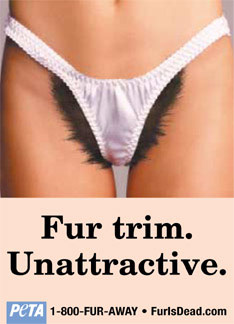
The ad features an photo of a thin woman, neck down, in just her underwear which reads "be proud of your body scan: go vegan". Did everyone else just facedesk? Yes? Okay good, let's move on. Ignoring the fact that we should be protesting body scans, not being proud of them, we're going back to the same 'ole argument that vegan = thin and thin = good. Not only does thin = good but apparently it's the only thing that matters when it comes to body pride. Couldn't someone still hate their body scan even if they're thin? If they didn't like their hips or their belly button or their breasts? Or what about men? Body scans show quite a bit of detail (and, unlike the ad, they show you naked, not with undies)- enough to make out your junk anyway.

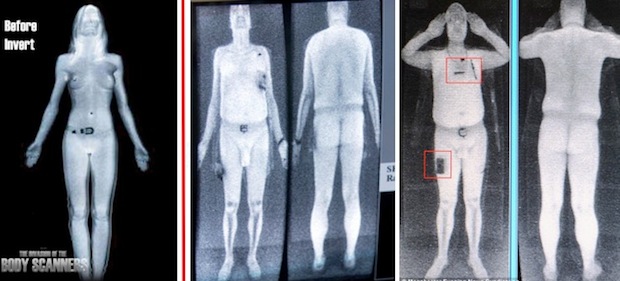

So while you're being completely and utterly violated by the TSA, all the while worrying about whether they'll make you buy an extra seat or give you a hard time, maybe you should remember next time that going vegan makes you look like the girl in the PETA ad.
See how svelte I became?

Thursday, February 24, 2011
Why Dieting Is Disordered Eating
 |
| photo by: Danbwr Photos |
America, as well as many privileged countries, are having a love affair with dieting. The dieting industry is a multi billion dollar a year industry. They spend copious amounts of greenbacks playing on our worst fears, hyping up false health scares, and convincing us that all of our problems would just go away if we weren't so freaking fat.
Okay, so what is disordered eating? The simplest definition is that it's an irregular eating habit. In other words, if you're not eating for sustenance and pleasure- then your eating habits are irregular. This can include emotional eating, calorie/food deprivation, and yes, dieting. Disordered eating is not an eating disorder, but they are connected and disordered eating often leads into eating disorders
Okay, so what is disordered eating? The simplest definition is that it's an irregular eating habit. In other words, if you're not eating for sustenance and pleasure- then your eating habits are irregular. This can include emotional eating, calorie/food deprivation, and yes, dieting. Disordered eating is not an eating disorder, but they are connected and disordered eating often leads into eating disorders
What is dieting? Dieting is an exercise in control- a common denominator with eating disorders. The most common form of dieting is calorie deprivation. Other than the fact that dieting makes you gain weight, not lose it, long term calorie restriction can lead to severe health problems. So- obsessively counting calories/fat grams/carbs for the purpose of altering your physical appearance. That is dieting.
Well, what's wrong with that? Firstly we can start off by saying that dieting and weight loss as firmly grounded in the superficial and vain- and I don't just mean the dieters but all of society that encourages, pressures, and expects people to look a very certain way, especially women. First let's get rid of the excuse that dieting is for health. People who are really changing their eating patterns for health don't diet- they engage in healthful eating behaviors by incorporating more healthy foods and limiting unhealthy ones. If you are on a traditional diet solely for health benefits then you are bigfoot-rare and probably aren't the type of person to read a blog like this anyway. Although I should warn you that if you're doing it for health- you're not going about it the best way (see the above links). In reality, even if some people hide behind the "it'll improve my health", let's be honest, if you got healthier but didn't lose any weight, how would you feel? Disappointed? Frustrated? Depressed? Then your real reason was to be thinner. Ignoring your body's natural weight and trying to push it below that, then that's not natural eating. It is disordered eating. What is natural eating? It is eating for sustenance and pleasure as well as paying attention to internal cues for what your body needs nutritionally as well as cues for hunger, fullness, thirst, etc. Dieting means ignoring hunger, ignoring nutrition (ignoring calorie needs is the most common but low carb diets come in a close second. The daily recommended amount of carbs is around 300 where, for example, some Atkins patients in the 'first phase' are restricted to about 20) and having an unhealthy focus on food.
Disordered Eating And The Line Into Eating Disorder
Susan Schullherr, LCSW, an advocate for the rights of patients with eating disorders, in an interview on PsychCentral, says that "Dieting sharply increases the likelihood of crossing the line from disordered eating into eating disorder". One of the most pervasive causes of disordered eating, she says, is trying to adhere to an unrealistic social ideal of thinness. Sounds familiar doesn't it? While I love the BBC Documentary "Why are thing people not fat" for it's ability to demonstrate how thin bodies handle excess calories and limited exercise, one of the most disturbing parts of it is that the participants all began engaging in aspects of disordered eating after the experiment was done- obsessively counting calories and fixating on what foods they could or could not have as opposed to their original behavior of just eating whatever they felt like and listening to internal cues (something that kept all of them thin and lean because that was their natural body type and weight). This highlighted just how afraid people who engage in disordered eating are of food. If you're afraid of food- you can be sure that you're not eating naturally.
People have stopped thinking of food as this great thing that is necessary for survival, health, and, indeed, can even be pleasurable and they've started thinking about it in terms of being an enemy. It's not what food does for you, it's what food does to you. Food is something you have to conquer, to fight. Hunger is an ambush, just waiting to mess up your entire life. And eating is a necessary action that holds your body as a prisoner of war. Someone please tell me how any of this can be considered a healthy relationship with food?
EDNOS (Eating Disorder Not Otherwise Specified) is the less well known and less cared about eating disorder and the one that most dieters cross the line into. According to the DSM-IV (the standard for diagnostic criteria of mental illness), the criteria for EDNOS is extremely vague and basically states that it's any eating disorder which doesn't qualify for anorexia, bulimia, or binge eating disorder, however, some examples of criteria include:
Based on the limited technical criteria above, following are some additional examples of the behaviors associated with persons struggling with EDNOS. (Please note: this is by no means a comprehensive listing). *1
- You're always on a diet, always coming off a diet, or always getting ready to go on one again (chronic dieting).
- You categorize foods as 'safe' and 'off limits', but are not significantly underweight and are not participating in bulimia.
- You starve yourself regularly, but are not significantly underweight (i.e. less than 85% ideal weight)
- You eliminate entire food groups from your diet (yes, that includes carbs!).
- You are obsessed with exercising but eat fairly regularly.
- You binge and/or purge, but not more than once a week.
- You substitute supplements and fad diets for real food, but are not significantly underweight.
- You skip social occasions because you feel fat, or because you are afraid of what's being served, yet are not significantly underweight.
- You are obsessed with eating only organic, natural or raw foods (orthorexia).
- You believe that everyone is as focused on your weight as you are.
- You refuse to eat regular meals, choosing instead to 'nibble' throughout the day on small portions of food (which usually leads to binging).
Any of this sounding familiar? At this point it's easy to point out that if you're fat you're expected to exhibit these behaviors. It's only an issue when you're already socially ideal- according to most people. But psychologically the process, the emotions, and the pain and obsession are the same. Of course, if you go and see a therapist who specializes in eating disorders they're likely to diagnose you with EDNOS whether you're fat or not, but the baseline information shows a significant bigotry against fat people. We're supposed to starve ourselves and obsess over food, right? Because accepting our fat means accepting laziness, and gluttony.
I spoke with nutritional anthropologist Leah Baskett from the University of Arizona who said, "I think in our society fat people can't have ED, period....If you're fat, and if you do not keep a food journal, weigh yourself all the time, ruminate over every single bite of food, and absolutely despise yourself for having any needs and despise your own body for having needs (esp. the need for food), you are a piece of shit." And I agree with her. Because these behaviors are expected in fat people and you're a "bad fattie" if you don't engage in them, then we end up thrown into a world of disordered eating that's not acknowledged as disordered eating. A "good" fattie is someone who's properly ashamed of their weight and making every (futile) effort to conform to the societal ideal.
So, if chronic dieting is considered a symptom of an eating disorder, then dieting in and of itself can certainly be called disordered eating. Especially since it doesn't achieve that which the dieter hopes for- health and lasting thinness. Baskett noted, "Every diet (or as they now label themselves, "lifestyle change") group I ever was a part of....did not discourage disordered thinking about food: on the contrary, they actively encouraged and promoted it." Linda Bacon, PhD and author of Health at Every size, told me, "Absolutely, I believe that dieting is disordered eating. As I write in Health at Every Size, "Any system that emphasizes external processes to determine what to eat is fragile and ineffective and promotes discontent and periodic rebellion and binging." I'd much rather support people in honoring their intrinsic drive to take care of themselves."
The bottom line seems to come down to the idea that fat people can't have eating disorders and the only form of disordered eating they can have is overeating. When people who aren't of the social ideal engage in disordered eating/eating disorders it is considered good. It means they are properly ashamed of their grotesque form and trying to become a good and better person. The fact that we promote disordered eating in anyone is worrying and is detrimental to both physical health and mental health. I would argue that the mental health damages of diet culture and body shaming is far worse than any physical health damages that are perceived by the general population.
Dieters who aren't underweight are the silently abused. Abused by an industry that profits from their pain, abused by a society that places worth and value on appearance and weight, and abused by themselves as they internalize the vitriolic messages about their bodies. Body acceptance and, yes, fat acceptance, is the only good way to combat these unhealthy relationships and feelings with and about food. While we should all be informed about our food choices and be aware of what goes into our bodies, food should not carry feelings of guilt, shame, or disgust.
The bottom line seems to come down to the idea that fat people can't have eating disorders and the only form of disordered eating they can have is overeating. When people who aren't of the social ideal engage in disordered eating/eating disorders it is considered good. It means they are properly ashamed of their grotesque form and trying to become a good and better person. The fact that we promote disordered eating in anyone is worrying and is detrimental to both physical health and mental health. I would argue that the mental health damages of diet culture and body shaming is far worse than any physical health damages that are perceived by the general population.
Dieters who aren't underweight are the silently abused. Abused by an industry that profits from their pain, abused by a society that places worth and value on appearance and weight, and abused by themselves as they internalize the vitriolic messages about their bodies. Body acceptance and, yes, fat acceptance, is the only good way to combat these unhealthy relationships and feelings with and about food. While we should all be informed about our food choices and be aware of what goes into our bodies, food should not carry feelings of guilt, shame, or disgust.
Subscribe to:
Posts (Atom)
Dreaming of Wheels
I finally dreamed of myself in a wheelchair . How we view ourselves is often hard. What we think of ourselves, even how we picture ourse...
